Inside an edition
An edition reads like a paper. Because it is one.
Here is what is in a weekly Fieldloop edition — the hero story, the secondary articles, the briefs, the editorial, the recognition footer — and why each piece does work no dashboard can.
See the anatomy, piece by piece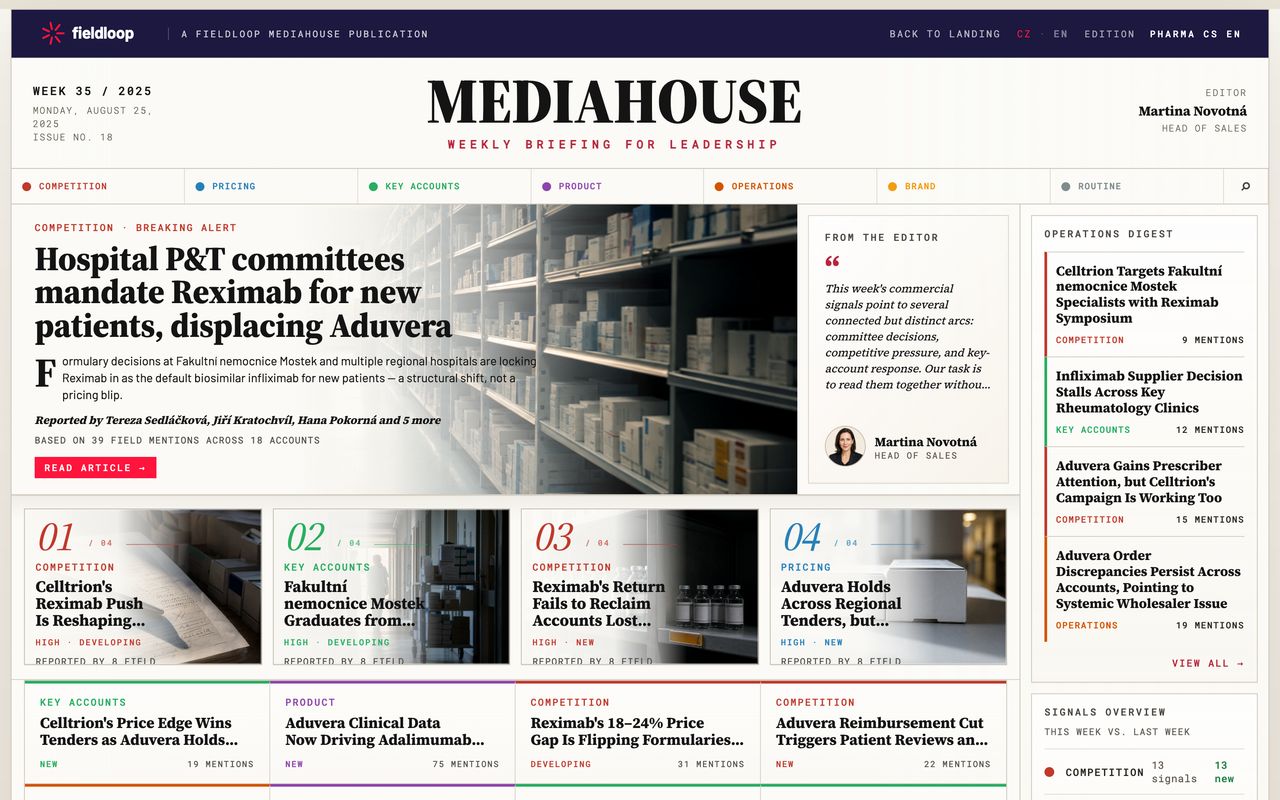
A single weekly edition · the front page
Demo edition. Brands, accounts and people are fictional — generated by our own simulator. Real customer data never leaves the tenant boundary.
The hero story
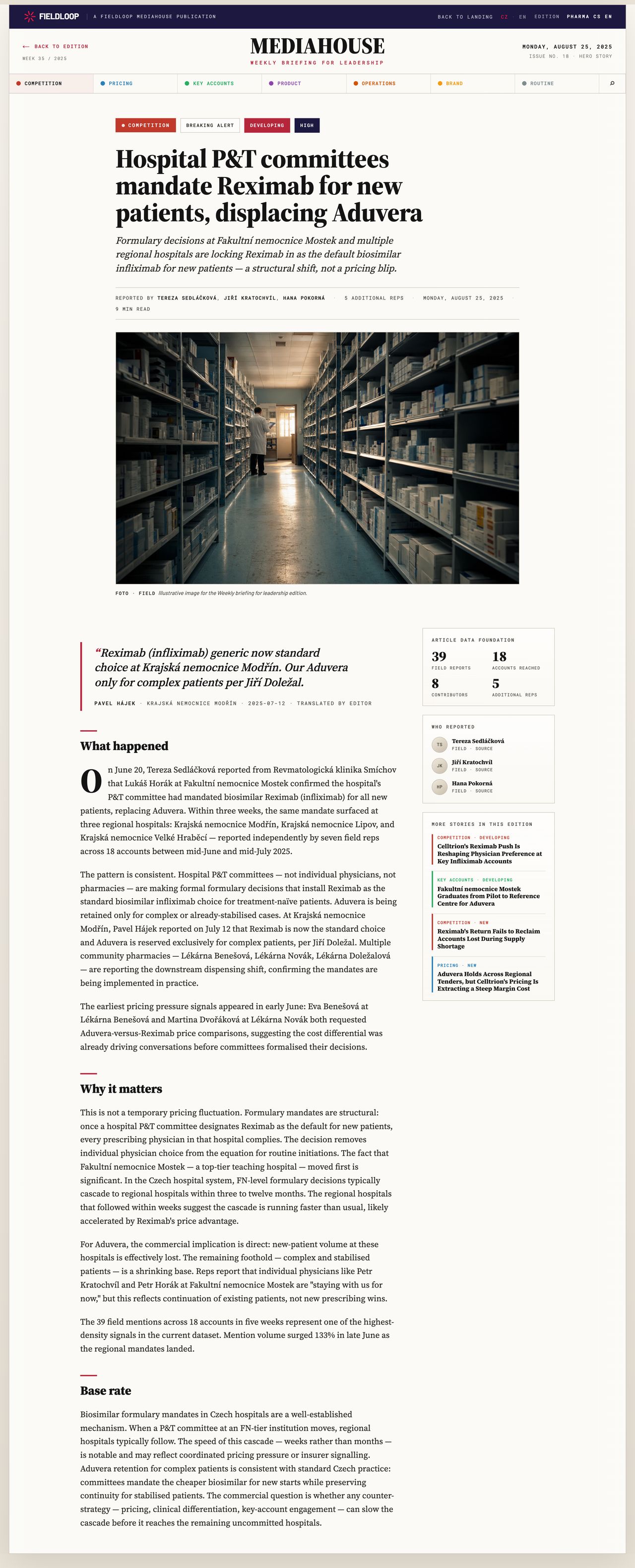
A 400–450 word lead article. One topic. One angle. The week's most important development, written like a feature, not a status update.
● Leadership opens the edition because the hero promises something — and delivers in eight paragraphs.
Up to four secondary articles
Supporting stories. About 250 words each. Different angles, different markets, different parts of the business.
● A leader reads all four in under ten minutes. None of them require effort. Each one earns its place.
Briefs and grid items
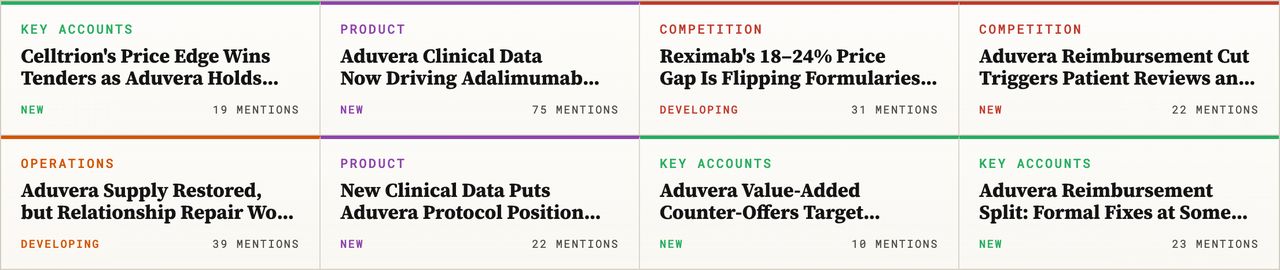
Short items — a headline, one or two sentences. The signals that matter but do not need eight paragraphs.
● This is where leadership picks up the things the field wants known but the boardroom does not need to discuss. Hard to fit in a dashboard. Native to a publication.
The editorial
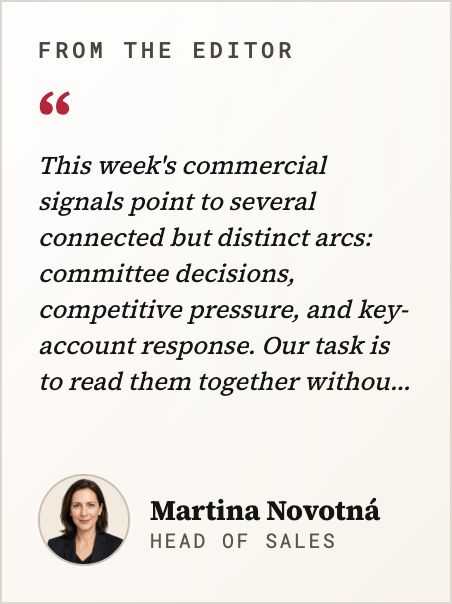
A one-paragraph note from the editor-in-chief — typically Head of Sales — synthesising the week.
● The voice of leadership lands inside the publication, not above it. Country managers read the editorial and know what HQ is thinking. Synchronisation without a meeting.

The recognition footer
A named list of contributors — the reps whose notes drove this week's stories. Their work, credited.
● This is the feedback loop the dashboard never could create. When a rep sees their name credited in next week's edition, they write more. They write better. Their next note feeds the next edition. Adoption stops being a training problem.
The format does the work. Each piece in an edition exists because it does something a dashboard cannot — synthesises, ranks, credits, voices. Together they make a publication the leadership team opens. Together they make the field write more. Together they close the loop between what the market is telling your reps and what your leadership team decides.